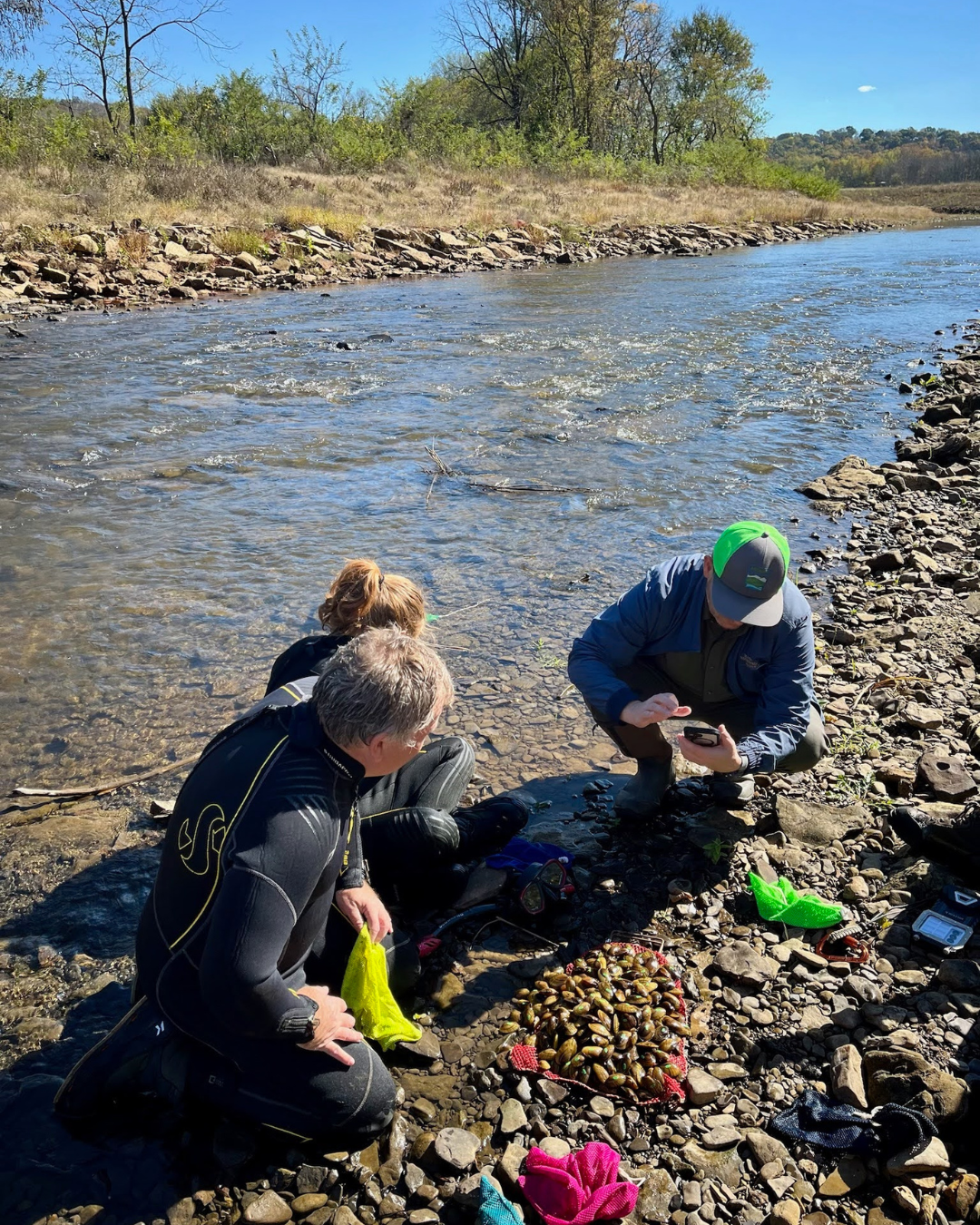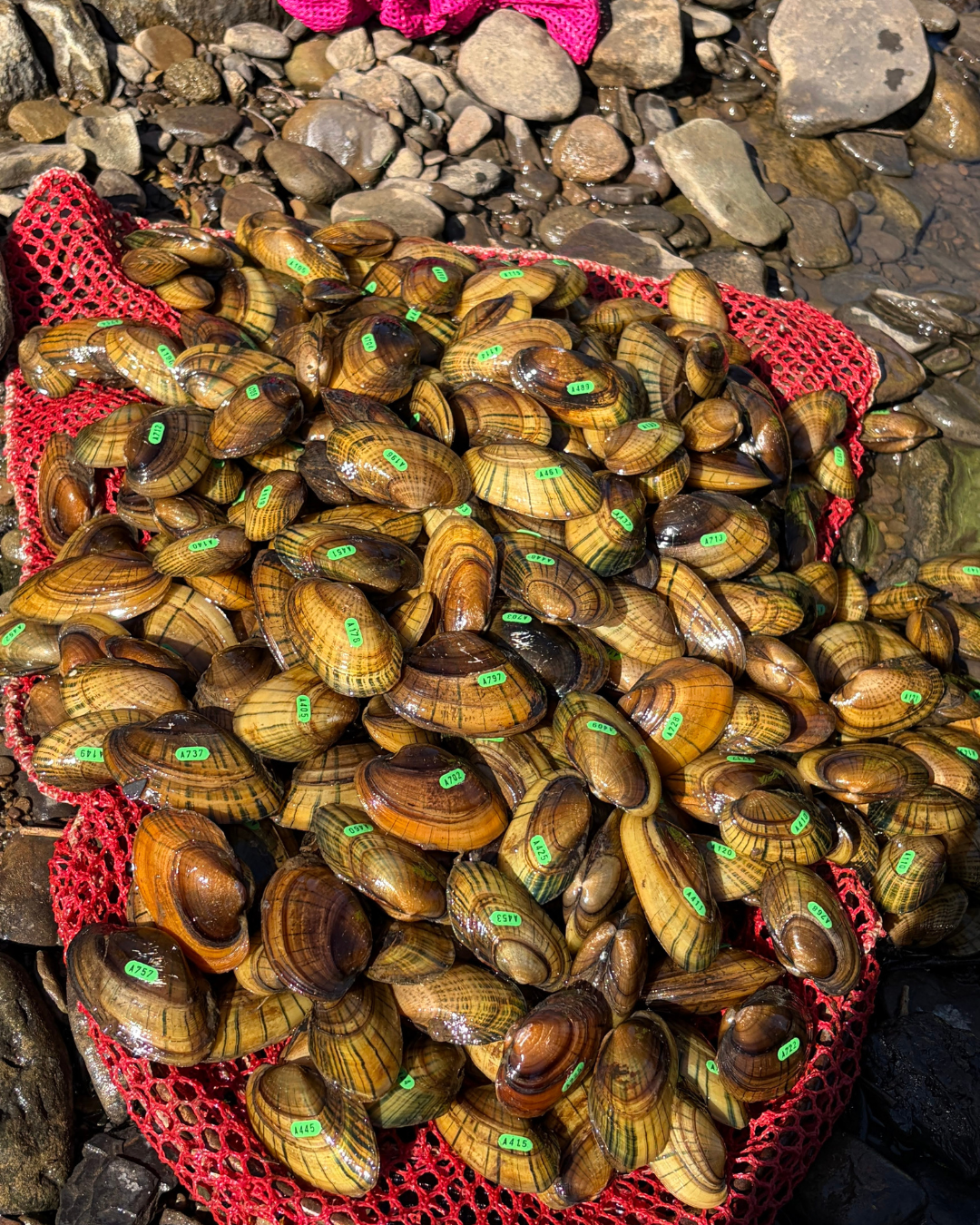
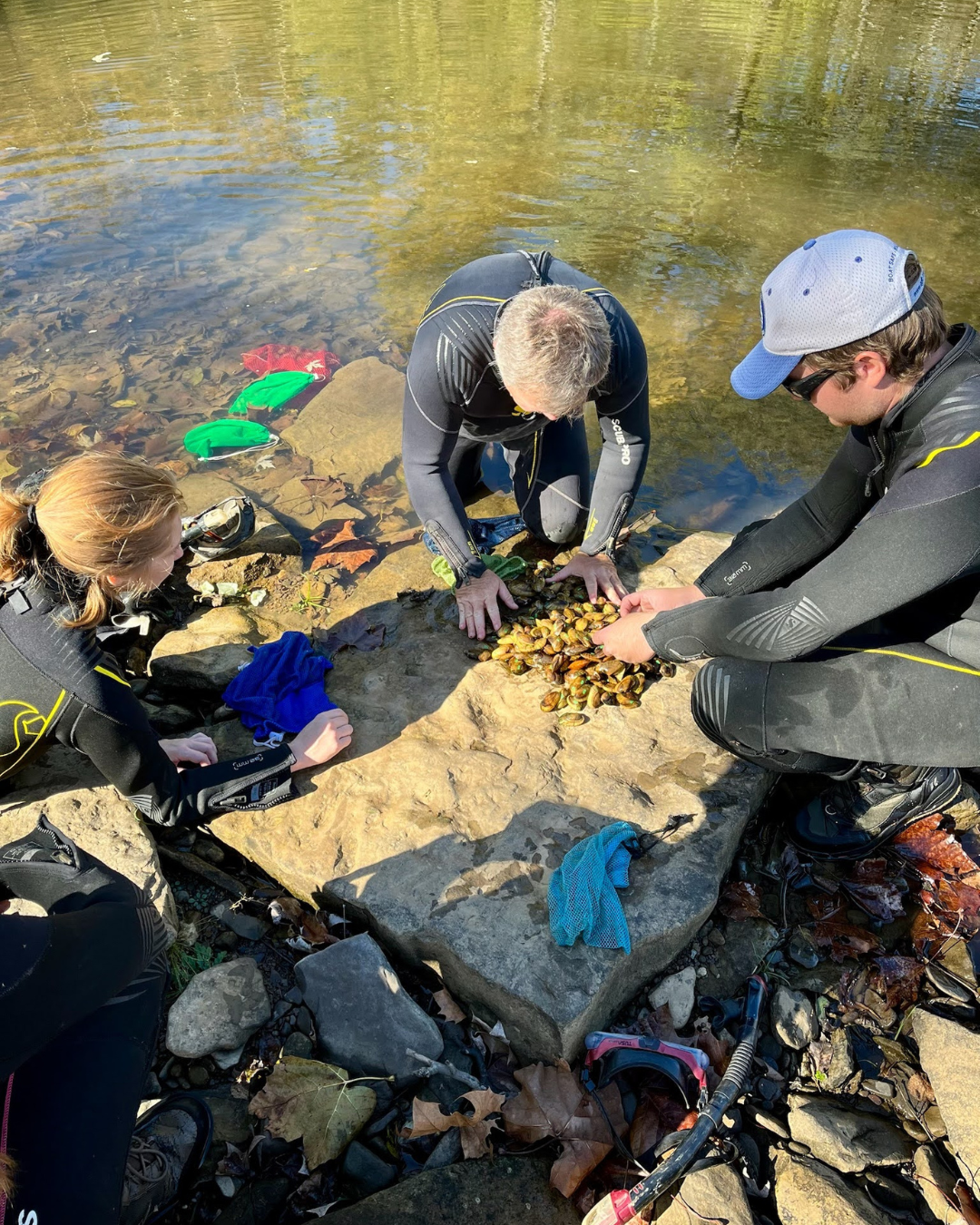
On Thursday, November 5, 2026, the Alliance joined the Arkansas Game and Fish Commission and The Nature Conservancy to release more than 4,000 freshwater mussels into War Eagle Creek.
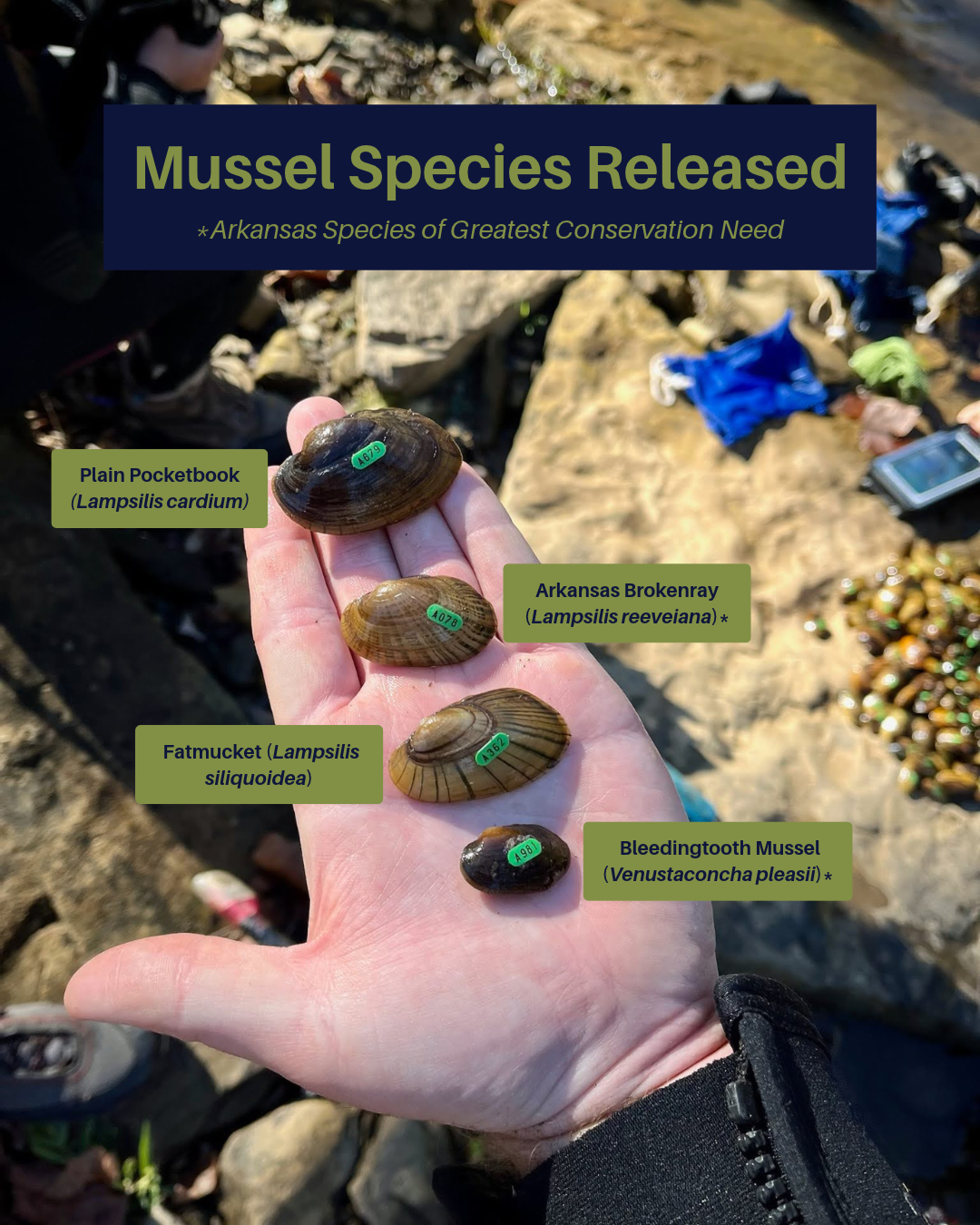
Daniel Hagood and Larry Berry (BWA), Chas McCoy (TNC), Dr. Kendall Moles, Dr. Amanda Bryant, Asa Chism, and Zoe Simmons (AFGC) released approximately 4,164 mussels, including 2 Arkansas Species of Greatest Conservation Need, the Arkansas brokenray (Lampsilis reeveiana) and bleedingtooth mussel (Venustaconcha pleasii). These mussels are the offspring of the individuals captured in 2023 and are approximately 2 years old. These mussels can live up to 30 years and rely on host fish to distribute their young to new areas.
Dr. Kendall Moles, an AGFC malacologist, led the initial mussel round-up at the Huntsville Dam removal site (November 2023), where 2,000 mussels were collected to be propagated and reestablished after restoration was completed.
Freshwater mussels rely almost entirely on host fish to reproduce, and removing stream barriers like dams and culverts is critical for their survival and recovery. Fertilized mussel eggs develop into microscopic larvae called glochidia. Once released, these larvae must clamp onto the gills or fins of a specific species of host fish to survive. The glochidia don’t cause any harm to the host first, and only stay attached for a few weeks. Then, the juvenile mussel releases and burrows into the ground until maturity.
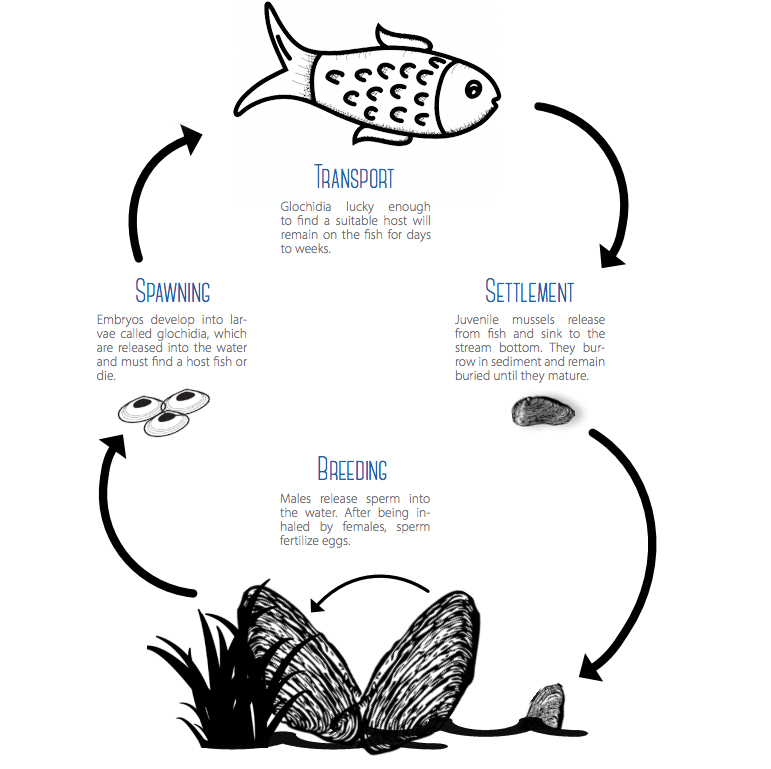
Image credit: Xerxes Society for Invertebrate Conservation
Importance of Stream Barrier Removal
Adult mussels are largely stationary and only move a few yards on their own; they rely on their host fish to travel and colonize new habitats. Low-head dams, poorly designed road culverts, and weirs block these fish movements.
- Reconnecting host fish. Removing barriers restores open passage for migratory and stream-dwelling fish, like darters, shiners, bass, and sculpins. Without access to their host fish, mussel populations become isolated and cannot reproduce.
- Preventing genetic bottlenecks. Connected rivers allow fish to carry larvae between separate mussel beds. This maintains genetic diversity and helps mussel populations recover after droughts, floods, or pollution events.
- Restoring natural river flow. Dams turn fast-flowing, oxygen-rich gravel shoals into stagnant, muddy pools. Removing outdated barriers restores the clean gravel substrates and steady currents that native Ozark mussels need to filter-feed and breathe.
Importance of Freshwater Mussels
Since freshwater mussels are largely stationary, they filter out nutrients as water flows around them. This makes food sources more visible and available for other aquatic animals to eat. Freshwater mussels are also a food source for birds, raccoons, and other wildlife. Mussel beds also create habitat for other aquatic invertebrates, which in turn provides a food source for many types of fish. Empty mussel shells are a refuge for crayfish, snails, and fish. Decaying shells are a slow-release source of nutrients, such as calcium, phosphorus, and nitrogen.
More Information
To learn more about the work Dr. Moles is doing with the Mussel Propagation Program, watch this Wild Science Webinar (note: this webinar was recorded in 2023. Some of the numbers mentioned may have changed). To learn more about the Alliance’s work in removing stream barriers and restoring the War Eagle Creek, click here.
Project Partners
This work is made possible through the America the Beautiful grant and many project partners: Arkansas Game and Fish Commission, Partners for Fish and Wildlife, U.S. Fish and Wildlife Service, Landowners, Madison County, City of Huntsville, Beaver Water District, SARP, and others.