As Northwest Arkansas expands and weather events intensify, understanding how water moves through our region is more critical than ever. The Beaver Watershed Alliance is partnering with the Arkansas Department of Agriculture Natural Resources Division, the EPA, and engineering experts at Olsson to develop a comprehensive 2-D flood model for the entire Beaver Lake watershed. This modeling initiative aims to produce a user-friendly GIS tool that helps cities, engineers, and conservation groups identify hotspots, predict downstream impacts, and prioritize necessary riparian restoration projects.
By utilizing this data, we can strategically identify where nature-based solutions, such as native plantings or large scale riparian restoration, will best stabilize streambanks and help protect our regional drinking water. Pinpointing these high priority areas ensures conservation resources are directed where they have the greatest impact.
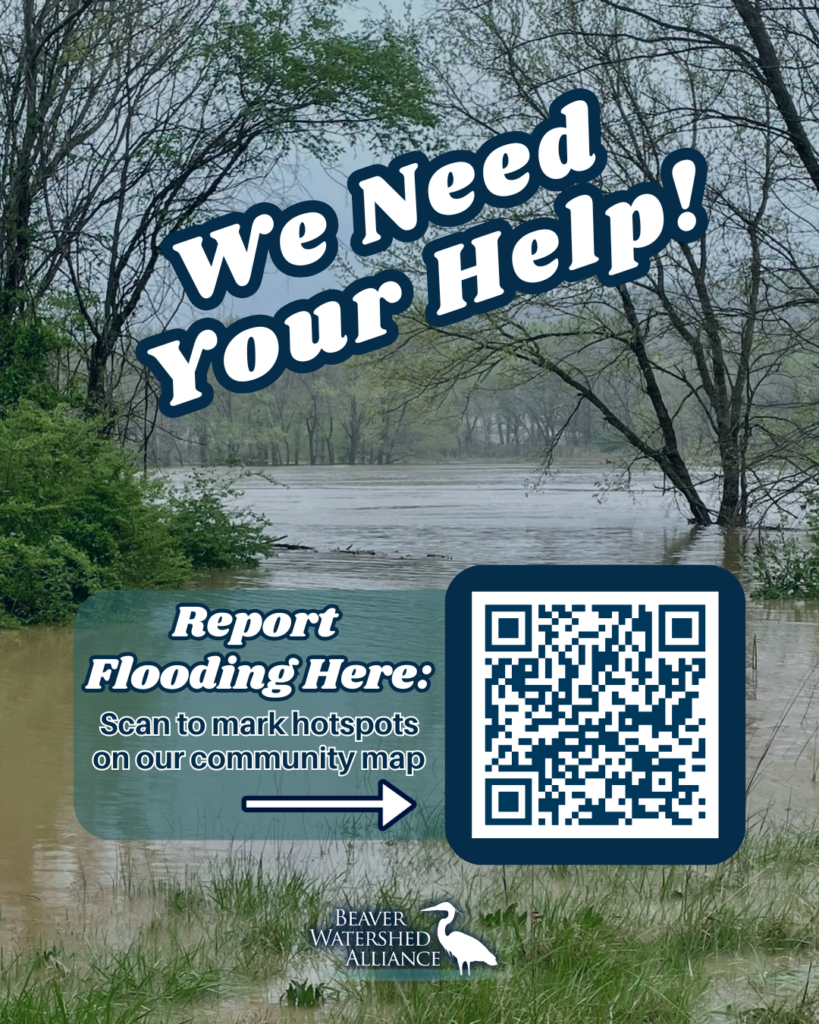
While technical data is the foundation of this project, local knowledge is the key to its success. No one knows the land better than the residents who live, work, and travel through it every day. We are calling on the community to help us identify “flooding hotspots” to ensure this model reflects the actual needs of our watershed.
How You Can Contribute: The Interactive Flood Map
To ensure our data is as accurate as possible, we need your on-site observations to help us identify and validate local flooding trends. If you have witnessed flooding, we invite you to mark it on our Interactive Flood Hot Spot Map.
We are looking for three specific types of observations:
-
Flooding Observed: Locations that commonly experience standing or rushing water during rain events.
-
Roadway Overtopping: Bridges, low-water crossings, or streets that become unsafe or impassable.
-
Property Impacted: Areas where water has affected homes, businesses, driveways, or structures.
How to Add Your Insights
Visit our interactive portal and follow these simple steps:
-
Step 1: Select “Add a Marker” and drop a pin on the map or search for a specific address.
-
Step 2: Choose the Category (Roadway, Property, or General Flooding) from the dropdown menu.
-
Step 3: Leave a Comment describing what you’ve seen.
-
Step 4: Provide a public screen name (it doesn’t have to be your real name).
-
Step 5: You can also “Agree” or “Disagree” with markers others have left to show the frequency of an issue.
Deadline for Input: Please share your data, hotspots, and comments by June 15, 2026.
Visit the portal at: https://olssonengage.mysocialpinpoint.com/embed/bwafloodmodel
By contributing your local expertise, you are helping the Alliance and our regional partners build a safer, more resilient Northwest Arkansas. Together, we can better manage our riparian corridors and protect the water resources we all share.