Protecting Important Cultural History with Stormwater Erosion Control
In July of 2022, the Alliance partnered with the Northwest Arkansas African American Heritage Association and a team of AmeriCorps volunteers to take on a very important project on Mount Sequoyah, formerly known as “East Mountain,” in Fayetteville, AR. Nestled in the foothills of Mount Sequoyah at the end of Rock Street lay East Mountain Cemetery. Dating back to the early 1800s, East Mountain Cemetery is one of Northwest Arkansas’ oldest cemeteries. Unlike the manicured lawns and well-kept headstones of either the private family cemetery, located within East Mountain Cemetery itself, or the Confederate Cemetery just across the road, East Mountain Cemetery bears no fence or formal sign differentiating it from the other two cemeteries. The eighty-four known graves comprising East Mountain Cemetery are not those of fallen Civil War soldiers but rather the final resting place of enslaved African Americans who worked the fields of the various plantations located around Fayetteville, their graves often marked with a rough-hewn headstone or footstone inscribed with a single name, if any.
Over two hundred years of changing land use above the cemetery, the gradual conversion of Mount Sequoyah’s historically open woodlands to closed-canopy forest, decades of neglect, and nature itself, have significantly changed East Mountain Cemetery. Bare soil covers ground once covered under a canopy of invasive bush honeysuckle. Thanks to the incredible work by the Northwest Arkansas African American Heritage Association, East Mountain Cemetery is being restored to preserve and document its cultural heritage and historical value to both Fayetteville and Northwest Arkansas.

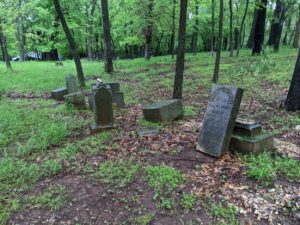
Above: Some of the few headstones that exist within the cemetery. The first photo shows a headstone reading “died Aug. 18, 1860”
Changes in land use, topography, and even wildlife browsing habits can alter stormwater runoff significantly, shifting runoff patterns and concentrating stormwater into fewer drainages or even carving new ones. Heavy rains and shifting runoff patterns created an influx of stormwater racing across East Mountain Cemetery from the hill above, causing several rills and small gullies to form as the landscape struggled to create streambeds where none previously existed. This rapid erosion severely impacts water quality and, in the case of East Mountain Cemetery, threatened to compromise several graves and the integrity of ongoing restoration efforts. The delicate features of this historic site precluded the use of permanent features or heavy machinery, but thanks to a suite of techniques called “Low-Tech Erosion Controls” the Alliance was able to assist the Northwest Arkansas African American Heritage Association. These Low-Tech Erosion Controls will allow stormwater to gently flow downhill through the cemetery, reducing sediment accumulation, hydrating the surrounding soil, and mitigating further erosion while creating wildlife habitat in the form of native grass and wildflower patches.
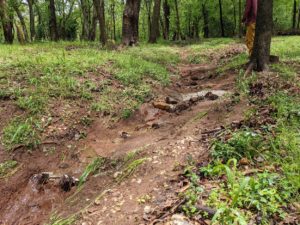
Above: One of the main gullies during a rain event.
Low-Tech Erosion Controls use simple materials and hand tools to create structures designed to incrementally diffuse the force of stormwater, encouraging the settling of sediment and the infiltration of water into the surrounding soil. Thanks to the help of a team of AmeriCorps volunteers stationed at the Mount Sequoyah Center, twelve Low-Tech Erosion Control structures were placed along the primary drainage bisecting the cemetery. By incorporating the stems and branches of invasive bush honeysuckle, this project will mitigate erosion and improve groundwater recharge (which improves watershed function and health). The removal of over half an acre of invasive understory shrubbery will also improve wildlife habitat, increase biodiversity, and help protect the historical gravesites.

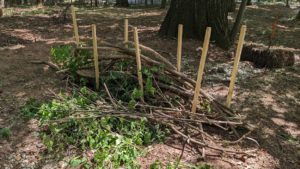
Above: (LEFT) Daniel Hagood, Alliance Stream & Forest Resource Specialist, assisting two AmeriCorps volunteers in installing one of the Low-Tech Erosion control structures. (RIGHT) A completed structure using honeysuckle that was removed from the site.
The Alliance is thrilled to be able to assist the Northwest Arkansas African American Heritage Association with the great work being done on this site and is excited to assist with continued conservation efforts to improve watershed quality. If you would like to learn more about the African American Heritage Association, please visit their Facebook page facebook.com/NWABlackHeritage or their website at nwaheritage.org. If you are interested in donating to help with the restoration of the cemetery, you can do so here or email Sharon Killian, board president, at cs.killian@gmail.com.
For more information on Low Tech Erosion Control and how it can be used to solve your stormwater erosion issues, please reach out to the Alliance at info@beaverwatershedalliance.org.
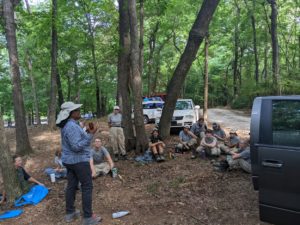
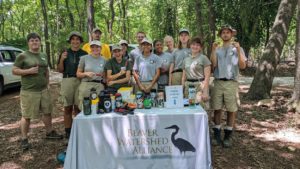
Above: (LEFT) Sharon Killian, Northwest Arkansas African American Heritage Association board president, speaking to volunteers about the cemetery. (RIGHT) Alliance staff and AmeriCorps volunteers spent the day working hard on this project. Thank you, volunteers!